
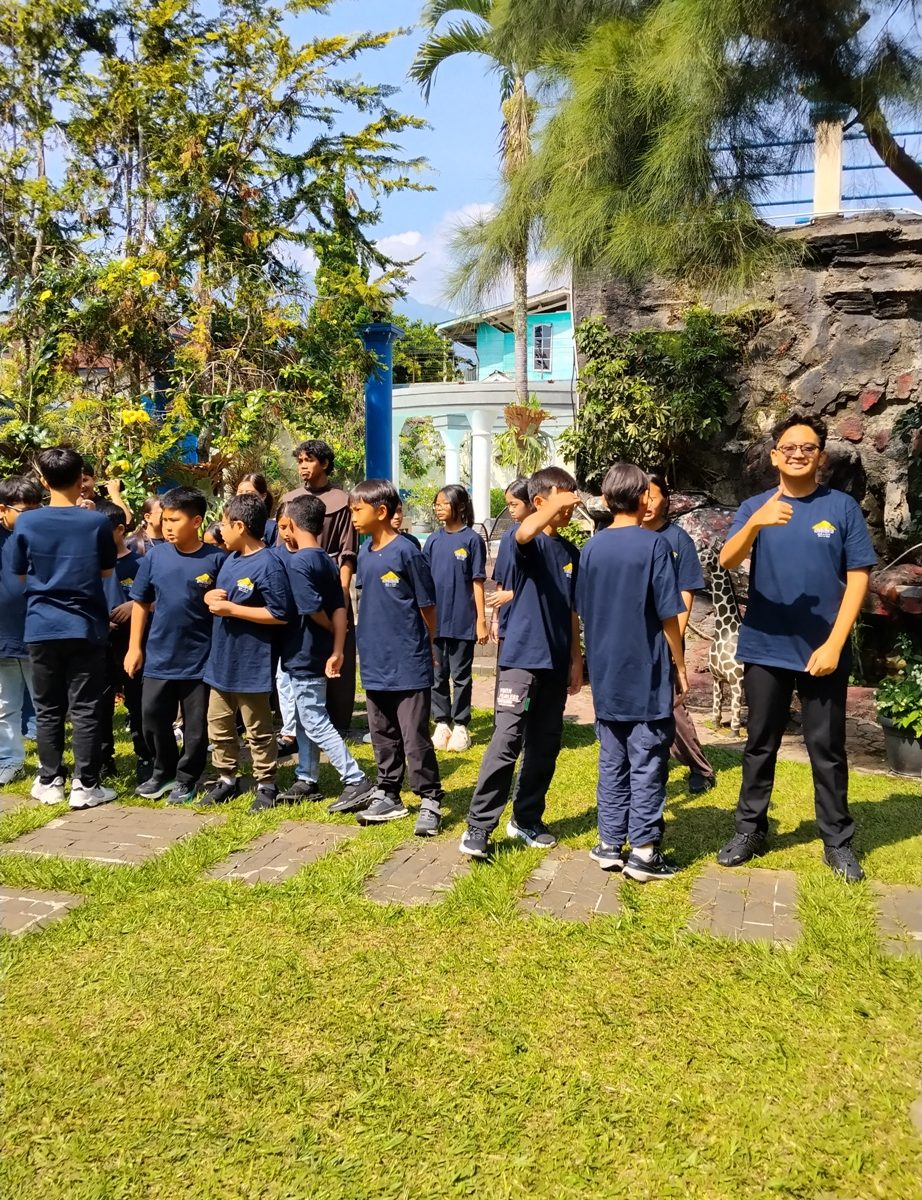
Beyond facilities and activities, children remember how a place makes them feel.
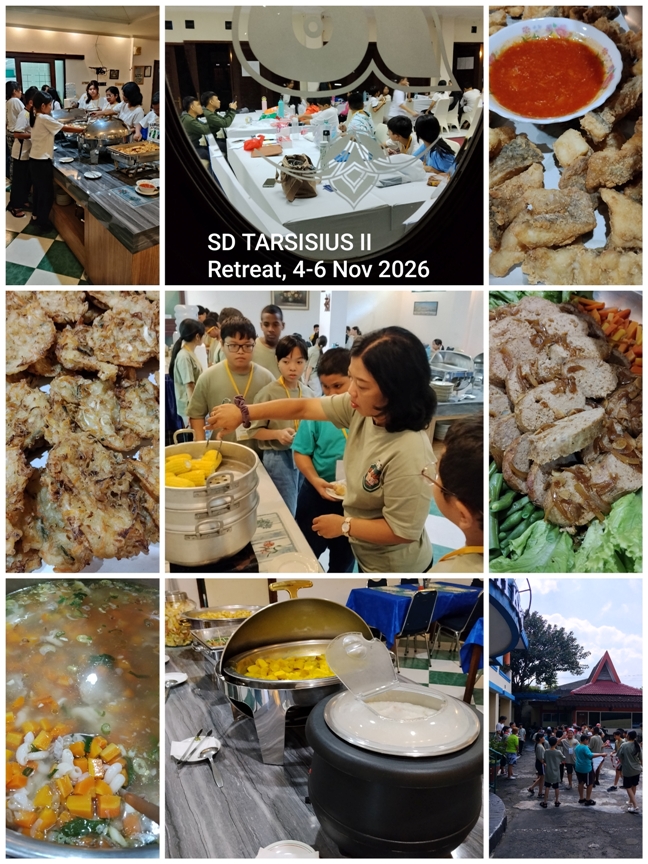
There is something special about welcoming children into a place that is new to them.
They arrive with their own personalities, expectations, curiosity, and sometimes a little uncertainty. Some are immediately excited to explore. Others may need time to become familiar with the surroundings and the people they meet.
For a hotel or retreat venue, preparing rooms, meals, and activity spaces is only part of the responsibility. The way we welcome young guests also matters.
During the school retreat of SD Tarsisius II Jakarta at Villa Giri Kembang Cipanas, we were particularly happy to hear the impressions of two sixth-grade students, Maria Lintang and Victoria Olive Lay.
Both mentioned something that we value deeply: the friendliness of the people serving them.
Maria appreciated the staff for being hardworking, friendly, and polite. Olive remembered the employees who smiled, enjoyed talking with the students, and made their stay more pleasant.
Their observations made us reflect on a simple question:
What can a smile, a friendly greeting, and a willingness to help mean to a child who is spending time in a new environment?
1. A warm welcome can make an unfamiliar place feel safer
Imagine arriving at a place you have never visited before. You do not yet know where the dining room is, where to gather, or whom to ask when you need something.
For a child, even ordinary things can feel unfamiliar at first.
A smile from a staff member, a friendly greeting, or someone patiently showing the way can make that first encounter easier.
In child development, warm and responsive relationships with adults are important in creating a sense of security. The National Association for the Education of Young Children (NAEYC article) describes how consistent warmth, respect, and caring interactions help children build trusting relationships. Simple gestures—smiling, greeting children, listening, and acknowledging them—are part of that process.
A positive greeting is not a complicated service procedure. It can be as simple as:
- Saying hello with a genuine smile.
- Giving directions patiently when a child looks unsure.
- Offering help without making the child feel uncomfortable.
- Listening when a student asks a question.
- Speaking in a calm and respectful manner.
These small interactions help a new place become less intimidating.
At Villa Giri Kembang, we believe hospitality should be felt, not merely described. We want students to feel that they are welcome here, whether they are arriving for a school retreat, a group activity, or a family gathering.
A warm welcome may take only a few seconds, but it can become part of a child’s memory of a place.
2. Children notice kindness—and they can appreciate the people behind it
One of the most meaningful parts of Maria and Olive’s testimonials was not simply that they liked the facilities or the food.
They noticed the people.
Maria described the workers as hardworking, friendly, and polite. Olive remembered their smiles and willingness to talk with the students.
This is worth paying attention to.
Children are not merely passive recipients of hospitality. They observe the way adults speak to them, respond to their questions, and offer assistance. They can notice when someone is patient, approachable, and genuinely willing to help.
Research National Library of Medicine on children’s social and emotional development also highlights the importance of positive adult role models. Children learn about respectful interaction partly through experiencing it themselves. Studies on gratitude and prosocial behaviour suggest that experiencing kindness can encourage positive feelings and, in some circumstances, helpful behaviour towards others.
That gives us a different way to understand the two students’ comments.
They were not only evaluating a service. They were recognizing the human beings who provided it.
A note about Generation Alpha and face-to-face communication
Today’s children grow up in a world where smartphones, online games, videos, and digital communication are part of everyday life. It is understandable that parents and educators sometimes worry about how much time children spend looking at screens and how this affects their face-to-face interactions.
Research on PubMed published does identify relationships between screen exposure and aspects of social-emotional development . A 2025 meta-analysis, for example, found a small association between screen exposure and lower social-emotional competence. However, this does not mean every child in Generation Alpha has poor communication skills. The relationship is complex, and the type and quality of digital activity matter.
Nor should eye contact be treated as the only measure of politeness, attention, or social ability. Children have different personalities, communication styles, developmental needs, and cultural backgrounds.
What Maria and Olive’s comments remind us is that children can still notice kindness and express appreciation for it.
Their ability to recognize the staff’s friendliness is a positive example of social awareness. We should celebrate that rather than assume that today’s children are unable to connect with people around them.
For us, it is a reminder that hospitality is also an opportunity to model good human interaction.
When adults offer kindness, children have an opportunity to experience, recognize, and appreciate it.
3. Good food is not only about what is served, but how it is presented
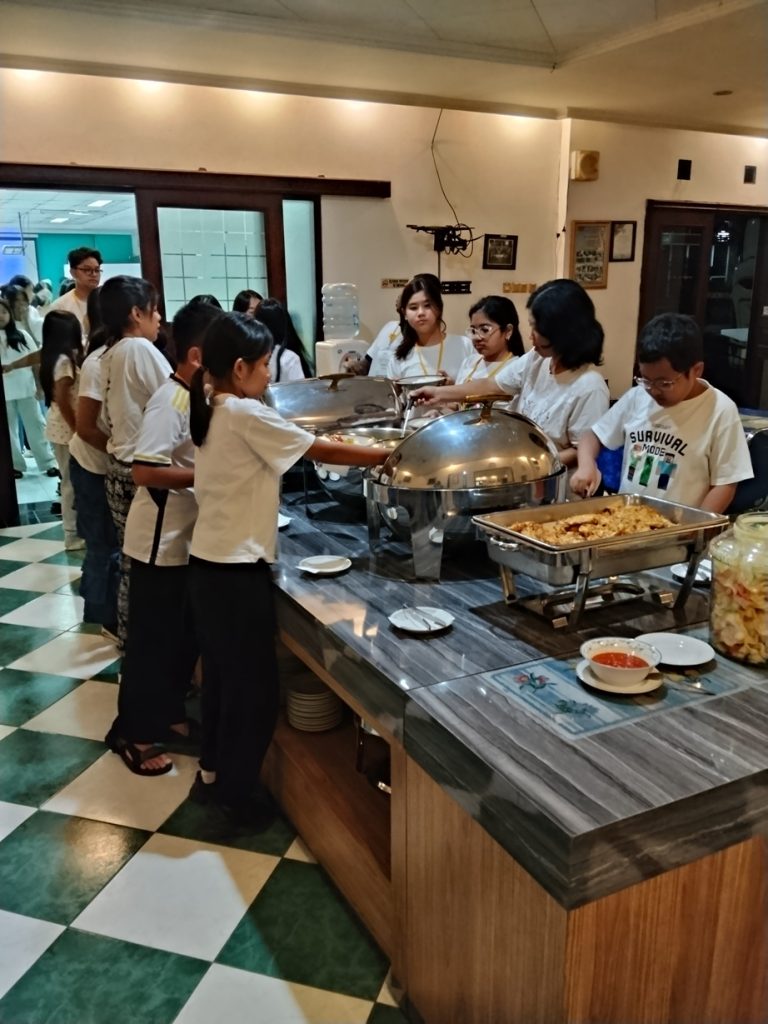
Another interesting part of the SD Tarsisius II retreat was the dining experience.
The photographs show students gathering around the buffet, choosing their food, and being served. There are familiar dishes, vegetables, corn, soup, rice, and protein options.
For a group of schoolchildren, preparing a menu is not simply a matter of making enough food for everyone.
There is another challenge: how do we create a menu that children enjoy while also giving them opportunities to eat a variety of foods?
This matters in Indonesia. UNICEF’s review of the national nutrition programme reports that the proportion of children and adolescents consuming at least five portions of fruit and vegetables daily declined from 3.3% in 2018 to 2.3% in 2023. The same report notes that unhealthy food choices remain common.
The challenge is not solved by simply putting vegetables on a plate. Food needs to be appealing, familiar enough to encourage tasting, and served in a way that gives children a positive experience.
The right mix makes a difference
One useful approach is to combine familiar dishes with vegetables and other food choices, rather than expecting children to enjoy an unfamiliar vegetable dish on its own.
For example, a group meal can bring together:
- Familiar main dishes: chicken, fish, or other protein choices that children recognize.
- Vegetables with appealing colour and texture: such as carrots, corn, broccoli, green beans, or mixed vegetables.
- Warm soups: a familiar way to include vegetables and other ingredients in a comforting dish.
- Staple foods: rice and other familiar sources of energy.
The photographs from the retreat show how these elements can appear together at a buffet: students can see the food, choose what appeals to them, and take part in the dining experience.
Food research offers useful guidance here. Repeated exposure to vegetables can help children become more familiar with them. Research also points to the value of variety, positive role modelling, and making vegetables available without turning mealtimes into a struggle.
This is why we believe a good group menu should be thoughtfully composed.
It should not be a competition between vegetables and the dishes children already love. Instead, it should create a meal in which familiar flavours and a variety of foods can sit comfortably together.
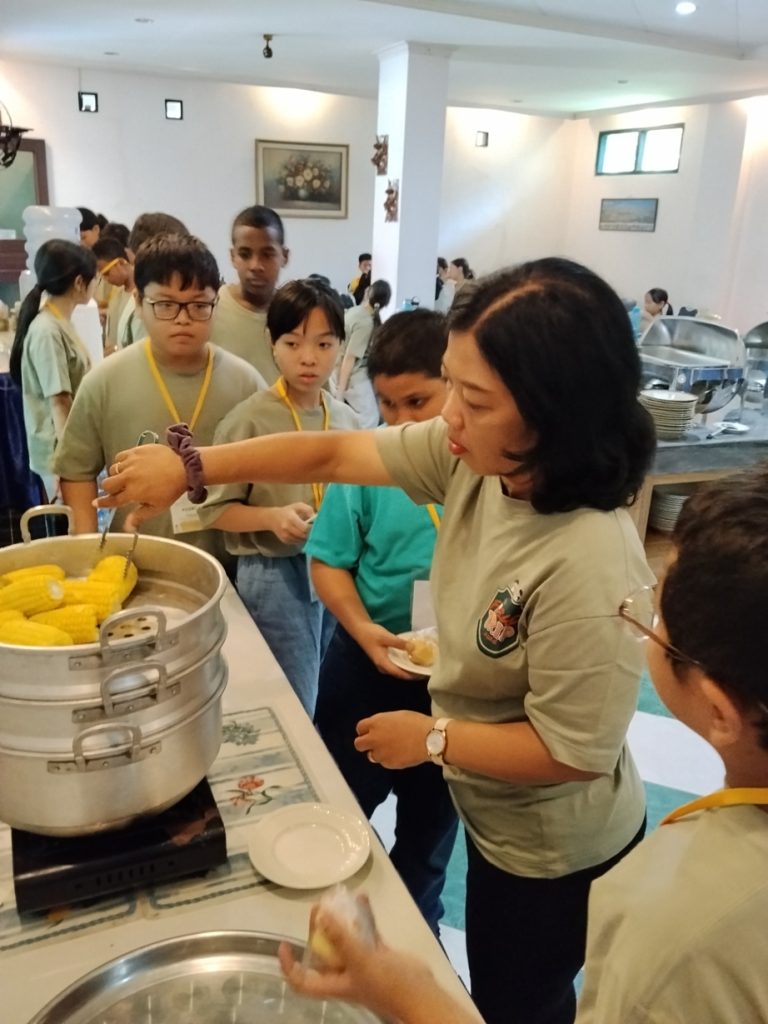
At Villa Giri Kembang, our kitchen team prepares meals for group guests. Menu arrangements can be discussed with the organizer according to the group’s needs, schedule, and budget.
We are happy when children enjoy their meals—and we also see every group meal as an opportunity to introduce variety in a pleasant, natural way.
A good meal is not only one that fills the stomach. It is one that makes people happy to gather around the table.
4. A retreat is also an opportunity to practise togetherness
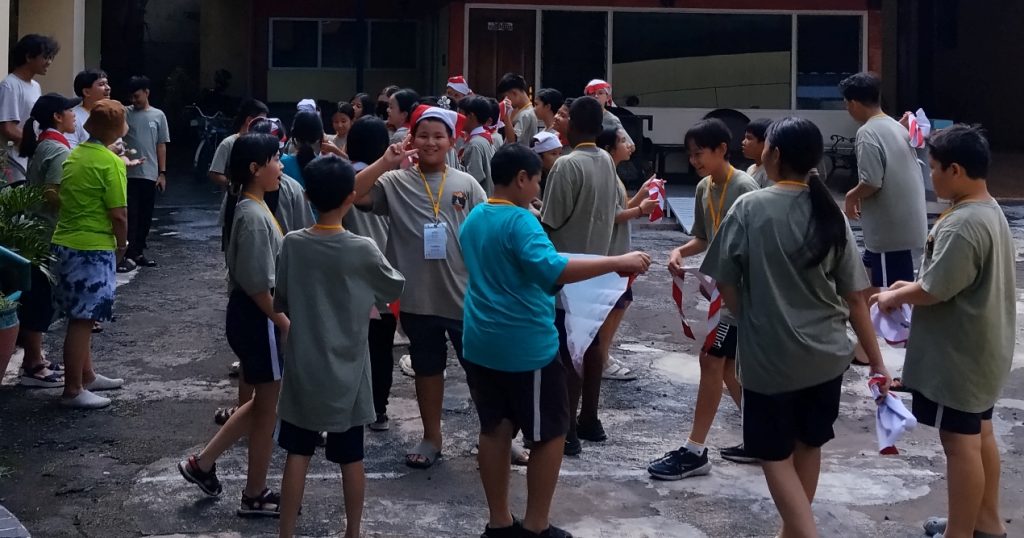
A school retreat takes children away from their usual classroom routines.
They share meals, join activities, talk with friends, meet people outside their school community, and experience a different environment together.
These moments create opportunities to practise social skills in everyday situations:
- Asking someone for help.
- Saying thank you.
- Waiting for a turn.
- Sharing a table.
- Respecting people who are serving them.
- Trying something new.
- Enjoying activities with friends.
These may seem like small things, but they are part of learning how to live and interact with others.
A retreat venue can support these experiences by providing spaces and services that encourage children to participate comfortably.
At Villa Giri Kembang, we are grateful to be part of these moments. We may provide the accommodation, meals, meeting spaces, and facilities, but the memories are created by the students, teachers, and everyone who shares the experience.
5. What Maria and Olive reminded us
When we listened to Maria and Olive, we were reminded that children can notice details adults sometimes overlook.
They remembered the staff’s smiles. They appreciated the way the workers interacted with them. They enjoyed the food and activities, and they were willing to share their impressions.
Their comments are meaningful to our team because they show that hospitality is not only about the physical facilities we provide.
It is also about the small human moments that happen every day.
We are thankful to Maria Lintang and Victoria Olive Lay for sharing their experiences and to Ibu Asih Rumanti, Principal of SD Tarsisius II, Bapak Stefanus Vicky Aristyo, Vice Principal, Ibu Yohana Ester Rita Nugroho dan Ibu Erania Benedicta Dhiu, the incredible teachers for accompanying the students and giving us the opportunity to serve their school retreat.
We also thank the parents’ students for placing their trust in Villa Giri Kembang.
A place where children are welcomed, cared for, and encouraged to enjoy togetherness
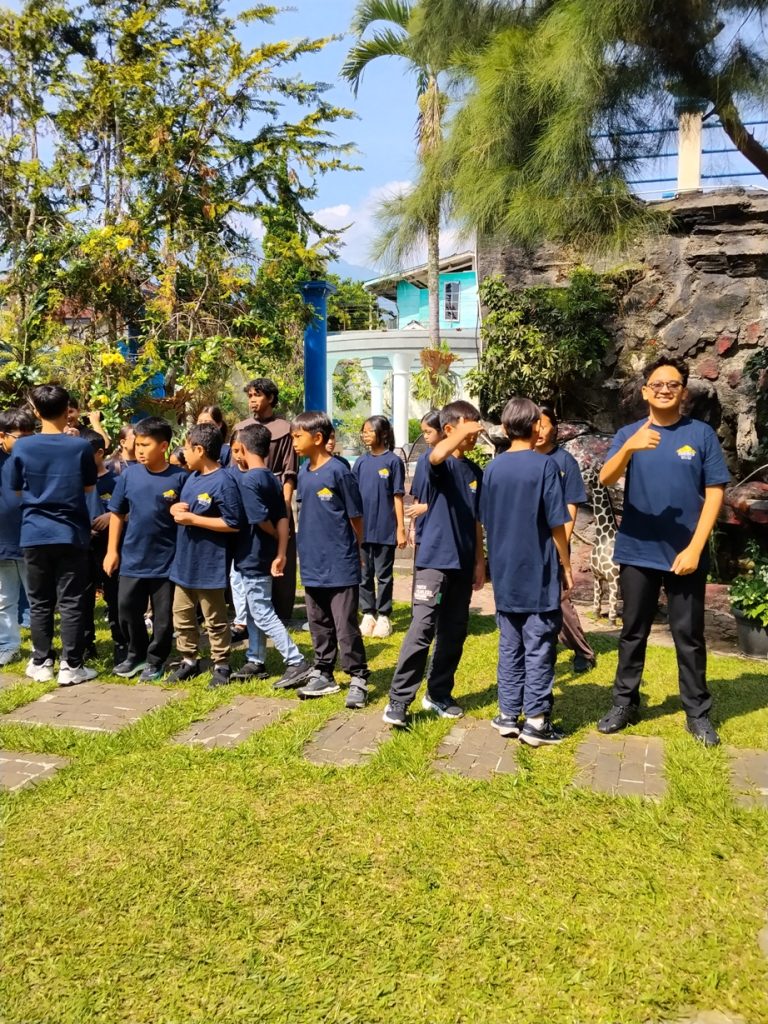
For schools planning a retreat, a student gathering, or group activities in Cipanas, choosing a venue means looking beyond the accommodation.
It means considering how students will spend their time, where they will gather, what they will eat, and how they will be welcomed.
Villa Giri Kembang offers accommodation, meeting spaces, a swimming pool, a playground, and group meal arrangements to support a range of school programmes.
We understand that each school has different needs. Our team is ready to discuss the number of participants, schedule, meal arrangements, and facilities required for your programme.
Because we believe that a good retreat is not only remembered for what children did.
It is also remembered for how they felt.
Villa Giri Kembang Cipanas — A Place to Stay, Play, and Feel Welcome.